Plan, track and
bill the work.
Projects, tasks, sprints and timesheets — with approved expenses that flow straight into Finance, so billing is a review not a rebuild.
Billing is a review, not a rebuild.
Timesheets and approved expenses flow into Finance automatically, so invoicing a project stops being a monthly reconstruction job.
Delivery
Plan it, then watch it move.
Projects with phases, milestones and budgets; Kanban and Gantt views; sprints and resources — all in one place.
Inside the module
Delivery and billing, together.
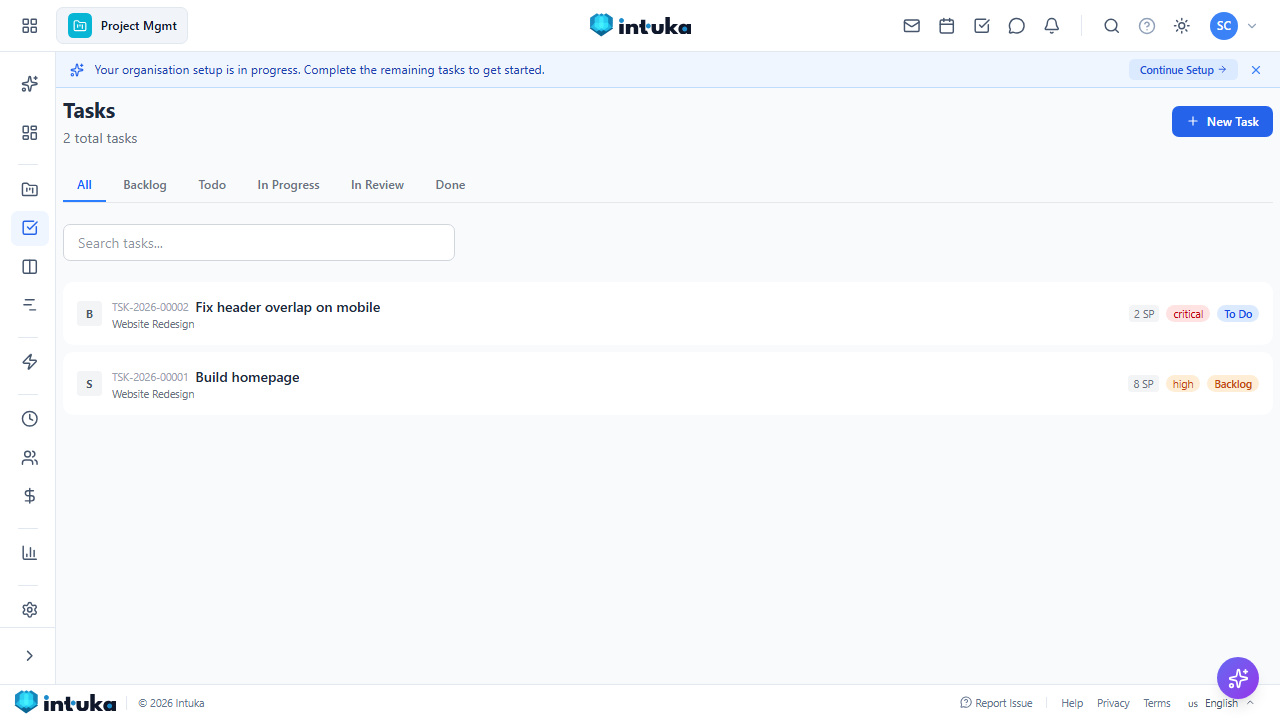
Projects
Phases, milestones and budgets.
Boards
Kanban and Gantt for the same work.
Kanban · Gantt · Sprints
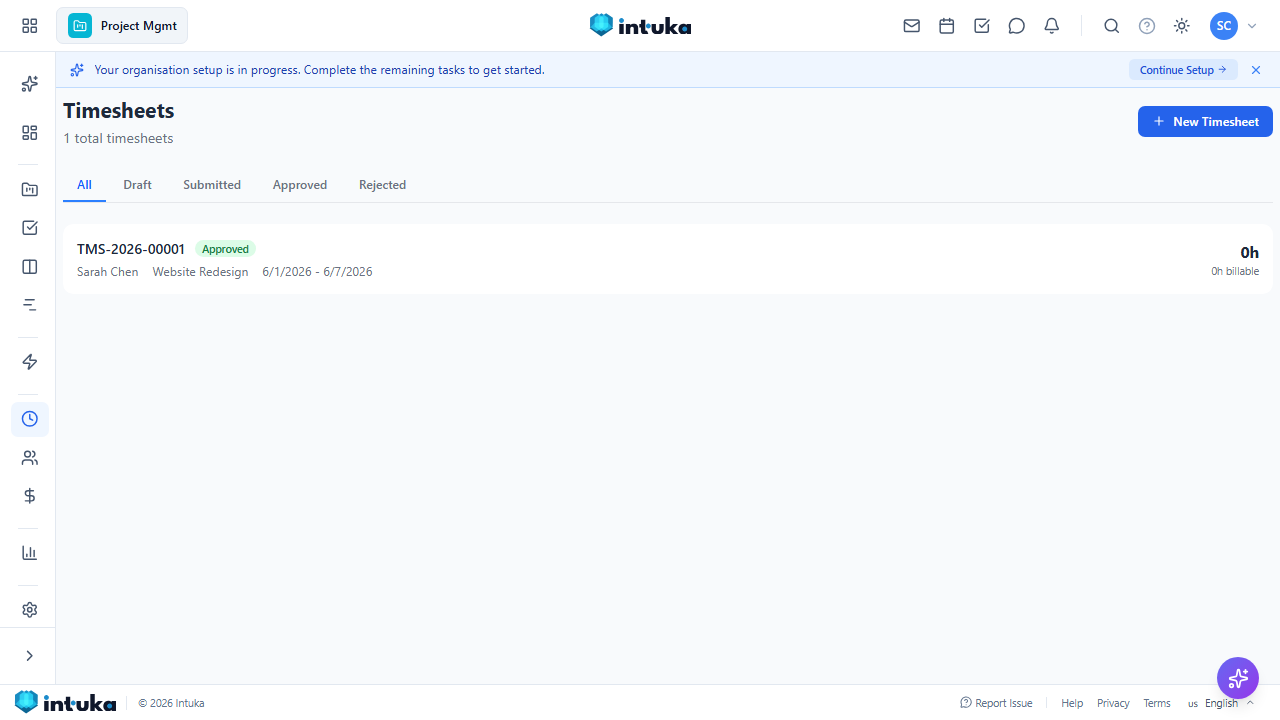
Timesheets
Billable hours captured against tasks.
Expenses
Approved expenses flow into Finance.
Expenses · Billing rates
Outcomes
What changes on Monday.
Billing
Invoice from actuals
Timesheets and expenses feed Finance, so billing reads from what actually happened.
Visibility
One plan, one board
Phases, tasks and sprints live in one place instead of a plan and a tracker.
Finance
Expenses that flow
An approved project expense becomes a finance record automatically.
An illustration, with your numbers
How many hours go into rebuilding billing each month?
Teams typically rebuild project billing from timesheets and expenses by hand. Move the numbers to fit your team — this is an illustration, not a promise.
Hours back per week
7
Hours a year
336
Work-weeks a year
8
That’s 8 work-weeks handed back a year — about 1.8 months of one person’s capacity.
Request early accessIllustrative only — not a measured customer result. Baseline used: 12 hrs/week across your inputs; 48 working weeks/year, 40-hour weeks.
Connected data
Projects feed Finance directly.
Timesheets and approved expenses become billable finance records — no monthly reconstruction.