IT service management,
on the same platform.
Incidents, problems, changes, a service catalog and a knowledge base — on the platform your business already runs on, so tickets escalate with their history.
Tickets that escalate with their history.
Incidents, problems and changes on one platform — with SLA timers, a service catalog and a CMDB, so nothing is retyped when a ticket becomes an engineering job.
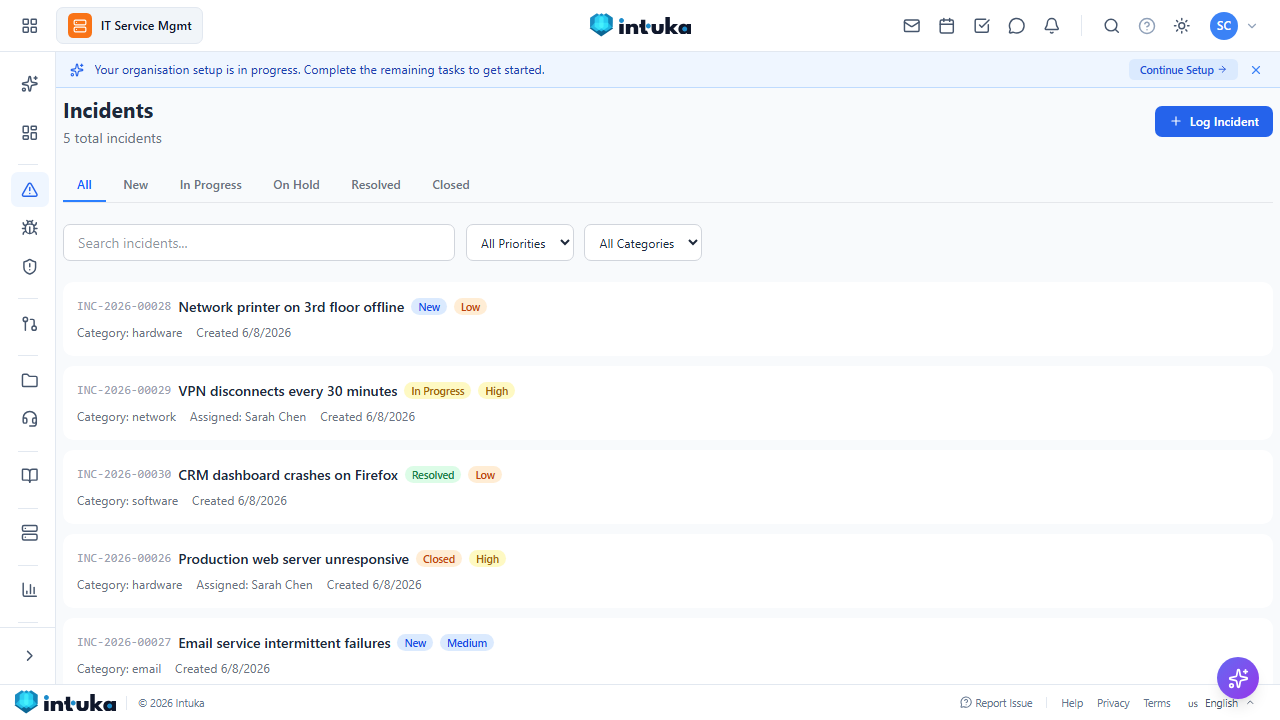
Service catalog
Requests with a real workflow.
A service catalog and request fulfilment with approvals — plus a knowledge base to deflect the repeats.
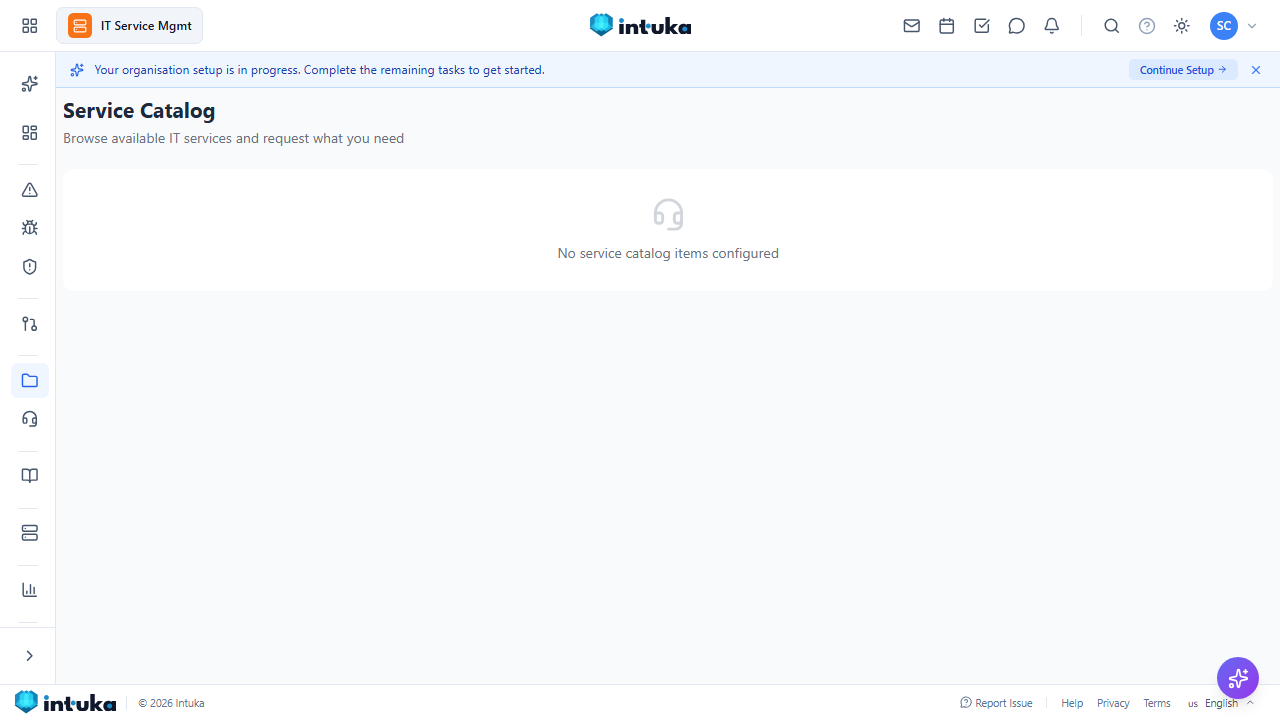
Inside the module
ITIL-aligned, without the weight.
Incidents
Priority matrix, SLA timers and a timeline.
Changes
CAB approval workflow and change tasks.
CAB · Approvals
Catalog
Service catalog and request fulfilment.
Knowledge
A knowledge base with full-text search.
KB · CMDB · SLA
Outcomes
What changes on Monday.
SLA
Timers that just run
SLA policies attach automatically, so breaches are visible before they happen.
Escalation
History travels with the ticket
When an incident becomes an engineering change, nothing is retyped.
Deflection
Fewer repeats
A knowledge base and catalog take the routine requests off the queue.
An illustration, with your numbers
How many hours go into triaging tickets by hand?
Teams typically lose hours to routing tickets by hand and untangling duplicate incidents. Move the numbers to fit your team — this is an illustration, not a promise.
Hours back per week
9
Hours a year
432
Work-weeks a year
11
That’s 11 work-weeks handed back a year — about 2.5 months of one person’s capacity.
Request early accessIllustrative only — not a measured customer result. Baseline used: 15 hrs/week across your inputs; 48 working weeks/year, 40-hour weeks.
Connected data
Support escalates into ITSM.
A platform support ticket becomes an engineering incident with its context attached — no retyping.